Loss on Drying (Oven Method)
Measures the percentage of mass a sample loses when dried under stated conditions, commonly at 105 °C to constant weight. The loss includes water and any other volatile matter.
- Gravimetric, hot air oven
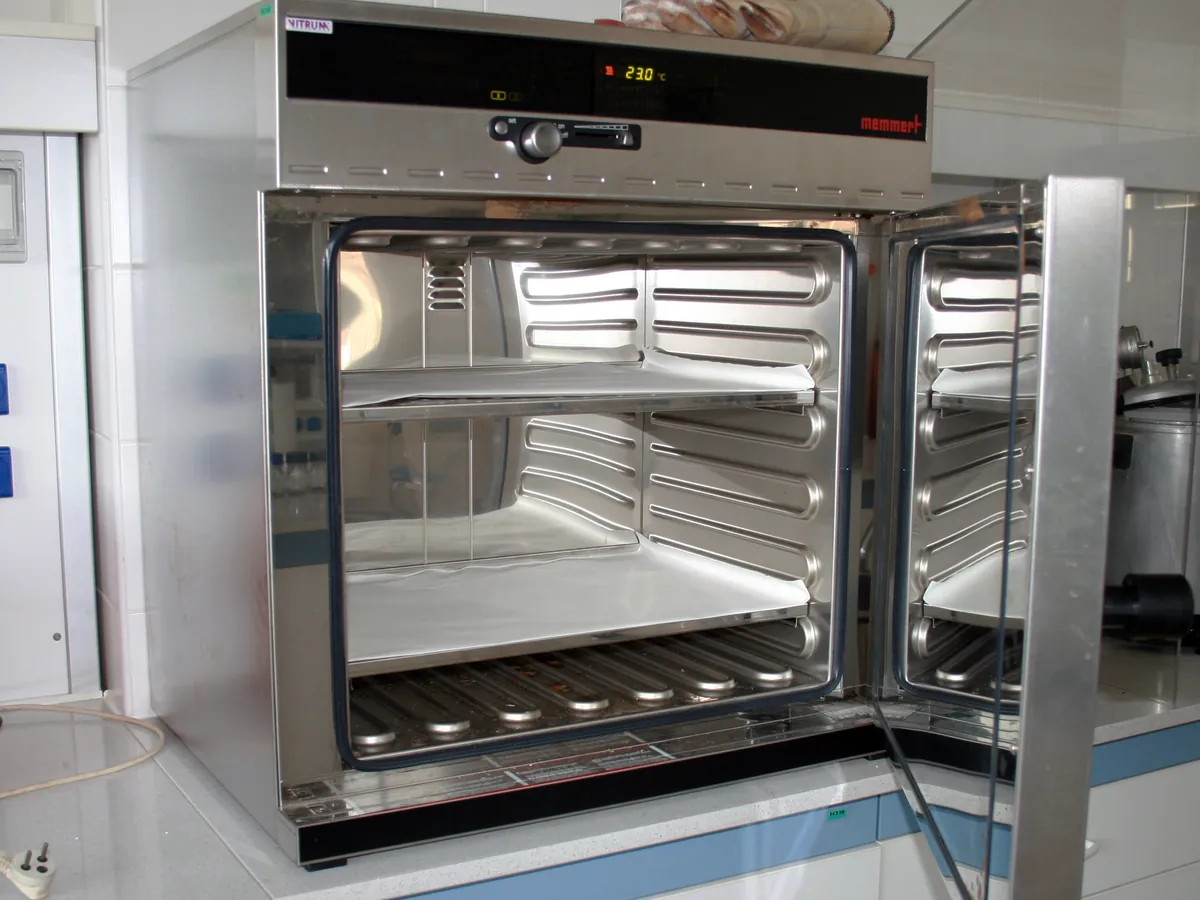
- Hot air oven
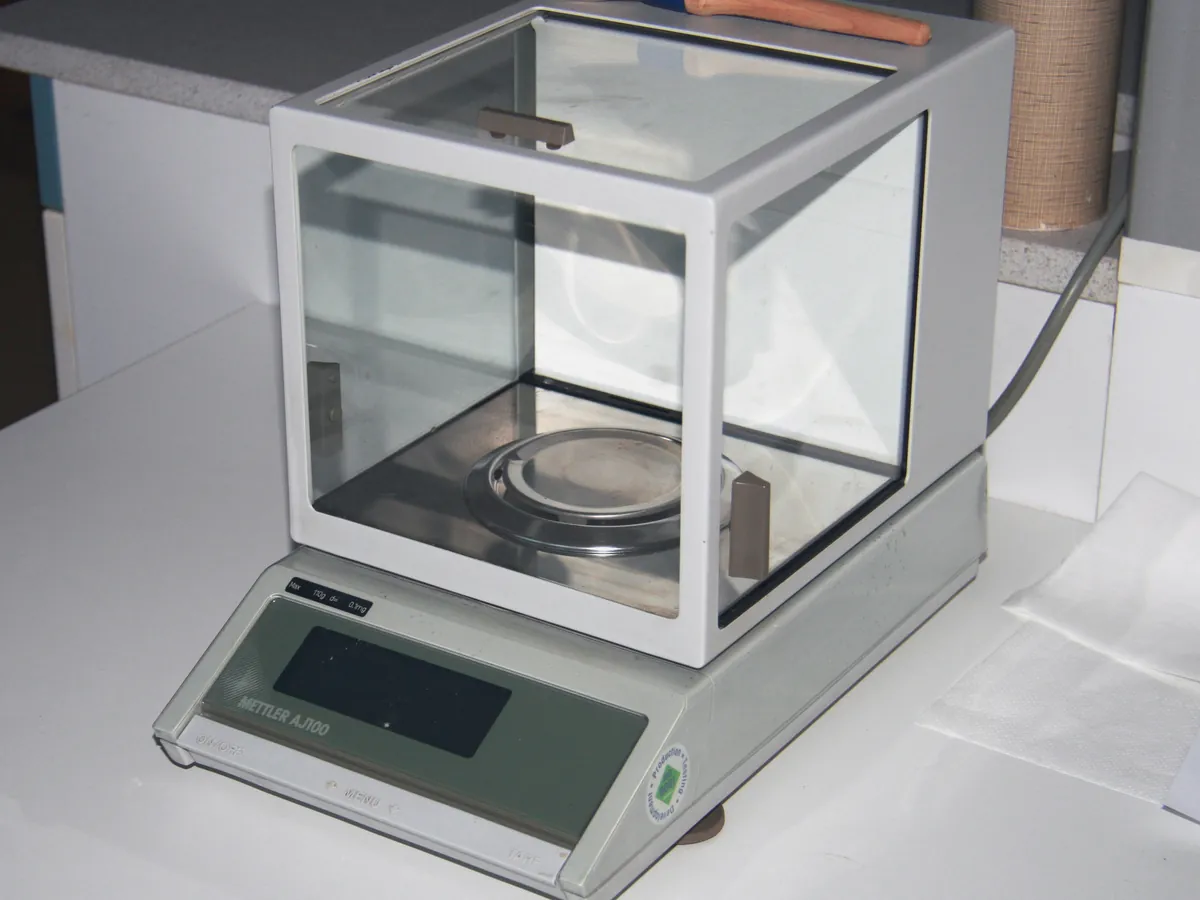
- Analytical balance
Reference: Typical method based on USP <731> and Ph. Eur. 2.2.32. Use the temperature, time and sample mass given in your monograph or specification.
Why this method works
Heating the sample drives off water and other volatile substances. The mass lost, expressed as a percentage of the original sample mass, is the loss on drying. Because the result depends on temperature, time and sample depth, these are fixed by the method.
Instruments used
Reagents & standards
| Reagent | Grade / specification |
|---|---|
| Glass-stoppered shallow weighing bottle | Previously dried under the same conditions and tared |
| Desiccator | With active desiccant (for example silica gel) |
Preparing the sample
- 01
Dry bottle
Dry the empty bottle for 30 min at the test temperature and weigh (W1).
- 02
Add sample
Add 1–2 g, spread to not more than about 5 mm depth; weigh (W2).
- 03
Dry
Dry with the stopper removed at 105 °C for the stated time.
- 04
Cool
Close, cool in a desiccator to room temperature.
- 05
Weigh
Weigh (W3); repeat drying to constant weight if required.
Procedure
- 1Dry a glass-stoppered shallow weighing bottle (with its stopper) for about 30 minutes under the test conditions, cool in a desiccator and weigh it (W1).
- 2Add 1 to 2 g of the sample, spread it evenly to a depth of not more than about 5 mm (10 mm for bulky materials) and weigh accurately (W2).
- 3Place the bottle in the oven at the specified temperature (commonly 105 °C) on a mapped shelf position, with the stopper removed and placed beside it.
- 4Dry for the time stated in the monograph (or to constant weight).
- 5Close the bottle in the oven, transfer it to a desiccator and allow it to cool to room temperature, then weigh (W3).
- 6For drying to constant weight, repeat drying for a further hour, cool and weigh again until two consecutive weighings agree within the pharmacopoeial limit.
Notes for analysts
- If the substance melts below the drying temperature, keep it for 1–2 hours at a temperature 5–10 °C below its melting point before drying at the specified temperature, as described in the pharmacopoeia.
- Heat-sensitive materials are dried in a vacuum oven at a lower temperature, as specified in their monograph.
- LOD will be higher than KF water if the sample contains residual solvents; lower if water is tightly bound and not released at 105 °C.
- Always weigh bottles at room temperature; a warm bottle reads light.
Method parameters (typical)
| Temperature | 105 ± 2 °C (or as per monograph) |
|---|---|
| Time | As per monograph, for example 3 hours, or to constant weight |
| Sample mass | 1–2 g |
| Sample depth | Not more than about 5 mm |
| Cooling | In a desiccator to room temperature |
System suitability & sequence
| Parameter | Limit |
|---|---|
| Oven calibration | Within due date; temperature verified at the set point |
| Balance | Daily performance check passed |
Typical sequence
- 1Dry and tare weighing bottles
- 2Weigh samples (duplicate)
- 3Dry
- 4Cool and weigh
- 5Repeat drying for constant weight if required
Calculation with a worked example
Where
- W1
- Weight of empty dried weighing bottle (g)
- W2
- Weight of bottle + sample before drying (g)
- W3
- Weight of bottle + sample after drying to constant weight (g)
Given
- W1
- 25.4312 g
- W2
- 26.4398 g
- After 3 h drying
- 26.4362 g
- After further 1 h (W3)
- 26.4360 g
Working
- Sample weight = 26.4398 − 25.4312 = 1.0086 g
- Constant weight check: 26.4362 − 26.4360 = 0.0002 g (0.2 mg), within a typical 0.5 mg limit
- Loss = 26.4398 − 26.4360 = 0.0038 g
- LOD = 0.0038 ÷ 1.0086 × 100 = 0.377%
Loss on drying = 0.38% w/w
Try it with your numbersWhat result passes
- Compare with the LOD limit in your specification or monograph (for example 'not more than 0.5%').
Validation parameters (ICH Q2(R2))
| Parameter | Typical requirement |
|---|---|
| Specificity | Not specific to water; where water alone is needed use Karl Fischer |
| Precision | Duplicate determinations agree within the SOP limit |
| Suitability | Material is stable at the drying temperature (no decomposition or melting) |
Run this method in LimsPulse: specifications and STPs under version control, results calculated and checked against limits, and a signed Certificate of Analysis.