Initial and final setting time of cement (Vicat needle)
Measures how long a cement paste of standard consistency takes to begin stiffening (initial set) and to harden fully (final set). Initial set must be long enough to mix, transport and place concrete; final set must not be so long that it delays construction.
- Construction materials
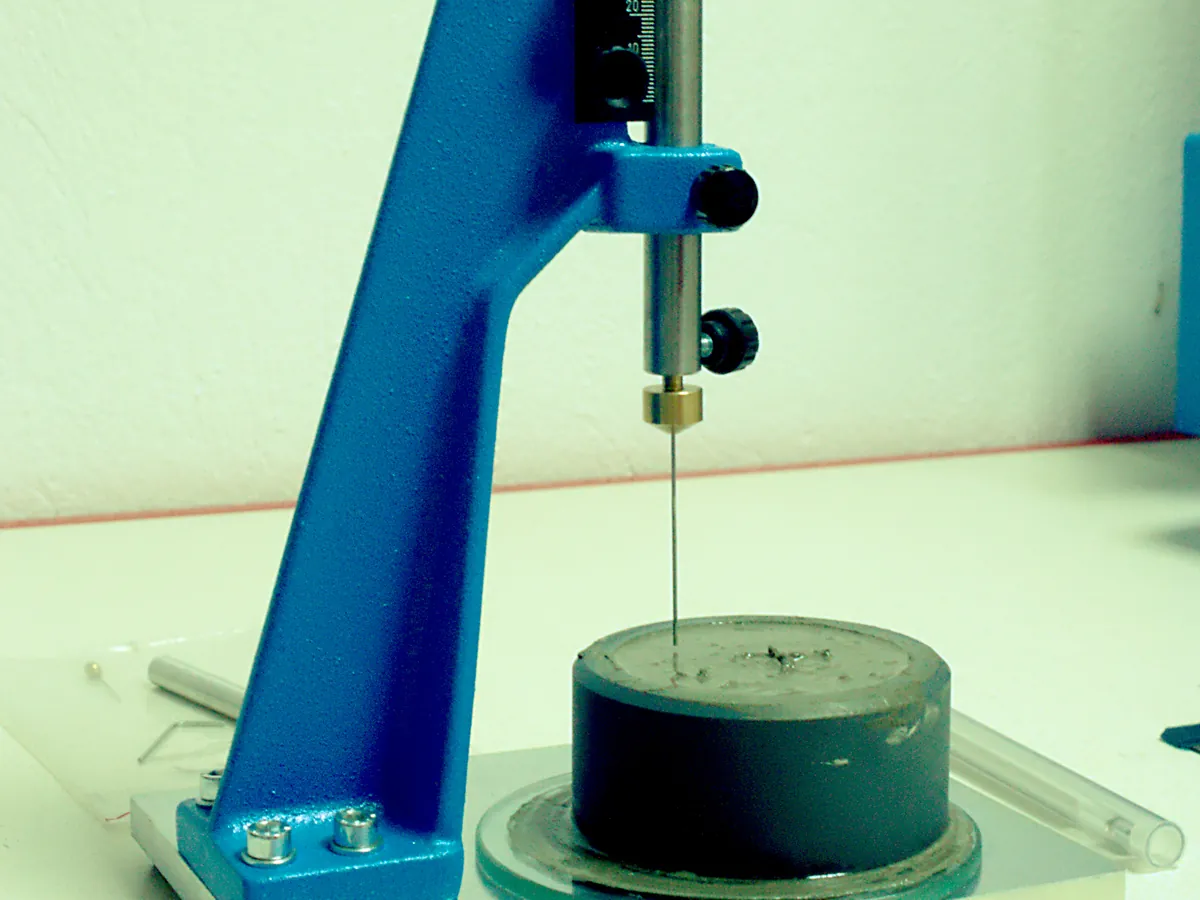
- Vicat apparatus with initial-set needle and final-set needle (annular attachment)
- Vicat
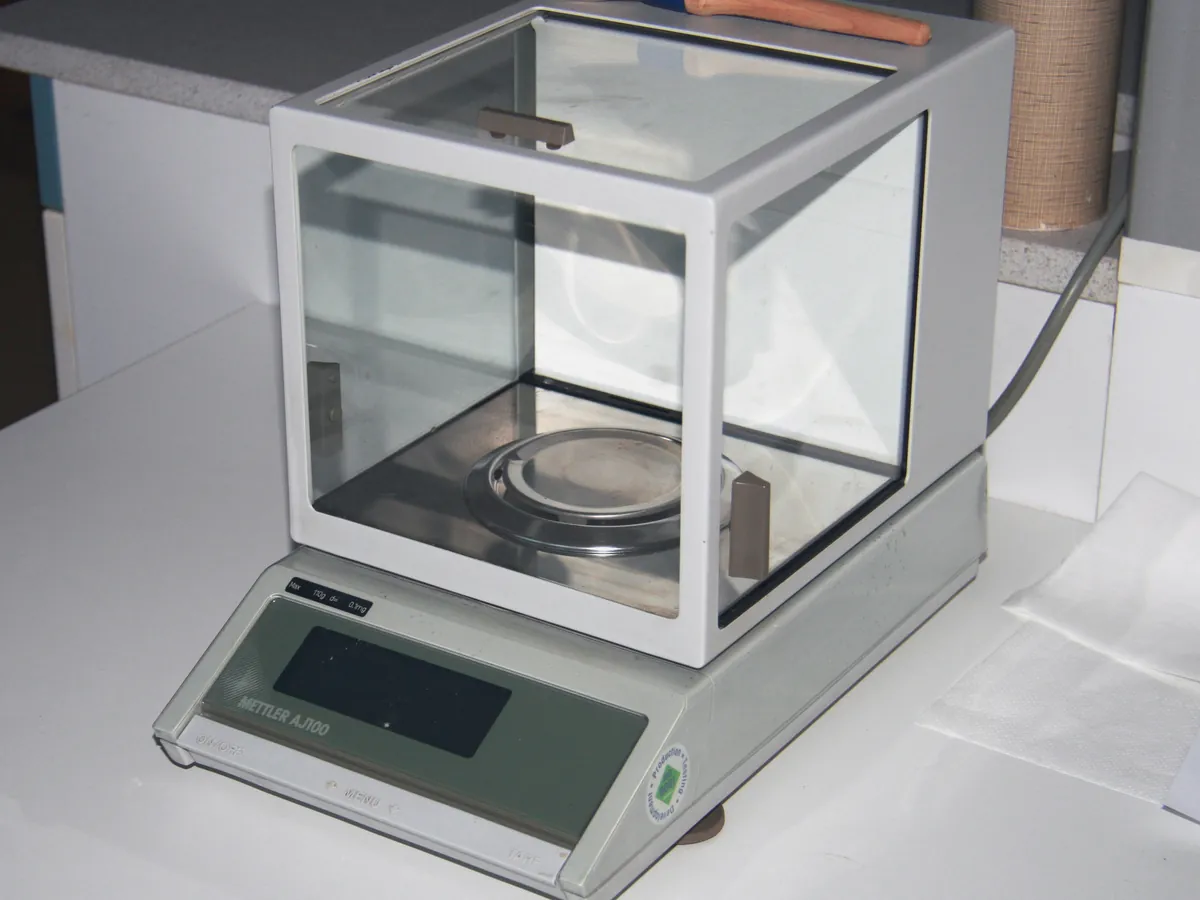
- Analytical balance
Reference: Based on IS 4031 (Part 5) and ASTM C191. Limits typically as in IS 269 for OPC. Follow the current editions.
Why this method works
Cement paste stiffens as hydration products form. A paste made with 0.85 times the water for normal consistency is tested at intervals with a fine Vicat needle (1 mm² cross-section). Initial setting time is the time from adding water until the needle can no longer pierce the paste to within about 5 ± 0.5 mm of the bottom of the mould. Final setting time is the time until a needle fitted with an annular collar makes an impression on the surface but the collar does not.
Instruments used
Reagents & standards
| Reagent | Grade / specification |
|---|---|
| Cement sample | Representative, lump-free, at laboratory temperature |
| Water | Clean potable or distilled water; quantity 0.85P |
Preparing the sample
- 01
Know P
Determine normal consistency P first.
- 02
Weigh
Weigh 400 g cement and 0.85P water.
- 03
Start clock
Start timing when water is added.
- 04
Gauge & fill
Gauge 3–5 min, fill and level the mould.
- 05
Store moist
Keep the mould in a moist closet between readings.
- 06
Probe
Lower the needles at intervals until initial and final set.
Procedure
- 1Calculate the water: 0.85 × P × cement mass / 100. For P = 29% and 400 g cement this is 98.6 g.
- 2Add the water to the cement and record the clock time. This is time zero.
- 3Gauge the paste for 3 to 5 minutes and fill the Vicat mould on its non-porous plate. Level the surface.
- 4Keep the filled mould in a moist closet or cabinet (typically 27 ± 2 °C and RH ≥ 90%) between readings.
- 5Initial set: fit the 1 mm² square needle. Lower it gently to the surface and release it quickly. Repeat at suitable intervals (often every 5–10 minutes near the expected set), at fresh positions at least about 10 mm apart and away from the edge.
- 6Record the time when the needle first fails to pierce the paste beyond 5.0 ± 0.5 mm from the bottom of the mould. Initial setting time = this time minus time zero.
- 7Final set: replace the needle with the one carrying the annular attachment. Lower it gently onto the surface at intervals.
- 8Record the time when the needle makes an impression on the surface but the annular attachment fails to do so. Final setting time = this time minus time zero.
- 9Clean the needle after every penetration so set paste does not build up on it.
Notes for analysts
- False set (rapid early stiffening that disappears on remixing) and flash set (true rapid set with heat) are different problems; note any unusual stiffening.
- Do not let the paste dry out between readings — a dry surface gives a falsely early set.
- Avoid vibration of the bench while the needle is in contact with the paste.
Method parameters (typical)
| Water | 0.85 × P (by mass of cement) |
|---|---|
| Cement mass | About 400 g |
| Initial-set needle | 1 mm² square section (1.13 mm diameter in ASTM C191) |
| Final-set needle | 1 mm needle with annular collar, about 5 mm diameter, set 0.5 mm behind the needle tip |
| Storage between readings | Moist closet, 27 ± 2 °C, RH typically ≥ 90% |
| Reading interval | Often 10–15 min early on, 5 min near the expected set |
System suitability & sequence
| Parameter | Limit |
|---|---|
| Needles | Straight, clean, correct section; annular collar position checked |
| Moving mass | About 300 g, rod falls freely |
| Temperature log | Room and moist cabinet temperature recorded during the test |
Typical sequence
- 1Normal consistency (P) determined first
- 2Paste at 0.85P gauged — time zero
- 3Initial-set needle readings until the end point
- 4Final-set needle readings until the end point
Calculation with a worked example
Where
- t0
- Clock time when water was added to the cement
- ti
- Clock time when the needle first fails to pierce beyond 5 ± 0.5 mm from the bottom
- tf
- Clock time when the needle marks the surface but the annular collar does not
Given
- P
- 29.0%
- Water used (0.85P × 400 g)
- 98.6 g
- t0
- 10:05
- ti
- 12:20
- tf
- 15:35
Working
- 1
Water = 0.85 × 29.0 / 100 × 400 = 98.6 g
- 2
Initial set = 12:20 − 10:05 = 2 h 15 min = 135 min
- 3
Final set = 15:35 − 10:05 = 5 h 30 min = 330 min
Initial setting time = 135 min (≥ 30 min); final setting time = 330 min (≤ 600 min). Complies with typical OPC requirements.
What result passes
- For OPC to IS 269, typically: initial setting time not less than 30 minutes, final setting time not more than 600 minutes. Check the current edition and the product standard for other cement types.
- ASTM C150 cements use different limits (for example a minimum initial and maximum final time measured by the ASTM C191 needle). Use the specification named in the contract.
Validation parameters (ICH Q2(R2))
| Parameter | Typical requirement |
|---|---|
| Repeatability | Duplicate tests typically agree within about 10–15 minutes for initial set |
| Temperature effect | Higher temperature shortens setting; always record conditions |
| Reading interval | Interval limits the resolution of the result; shorten intervals near the end point |
Run this method in LimsPulse: specifications and STPs under version control, results calculated and checked against limits, and a signed Certificate of Analysis.