Muffle Furnace
An electrically heated, insulated chamber that reaches several hundred to over 1000 °C. In QC it is used to ignite samples for sulphated ash (residue on ignition) and to bring crucibles to constant mass.
- Pharmaceutical
- Food
- Cement and ceramics
- Mining
- Environmental
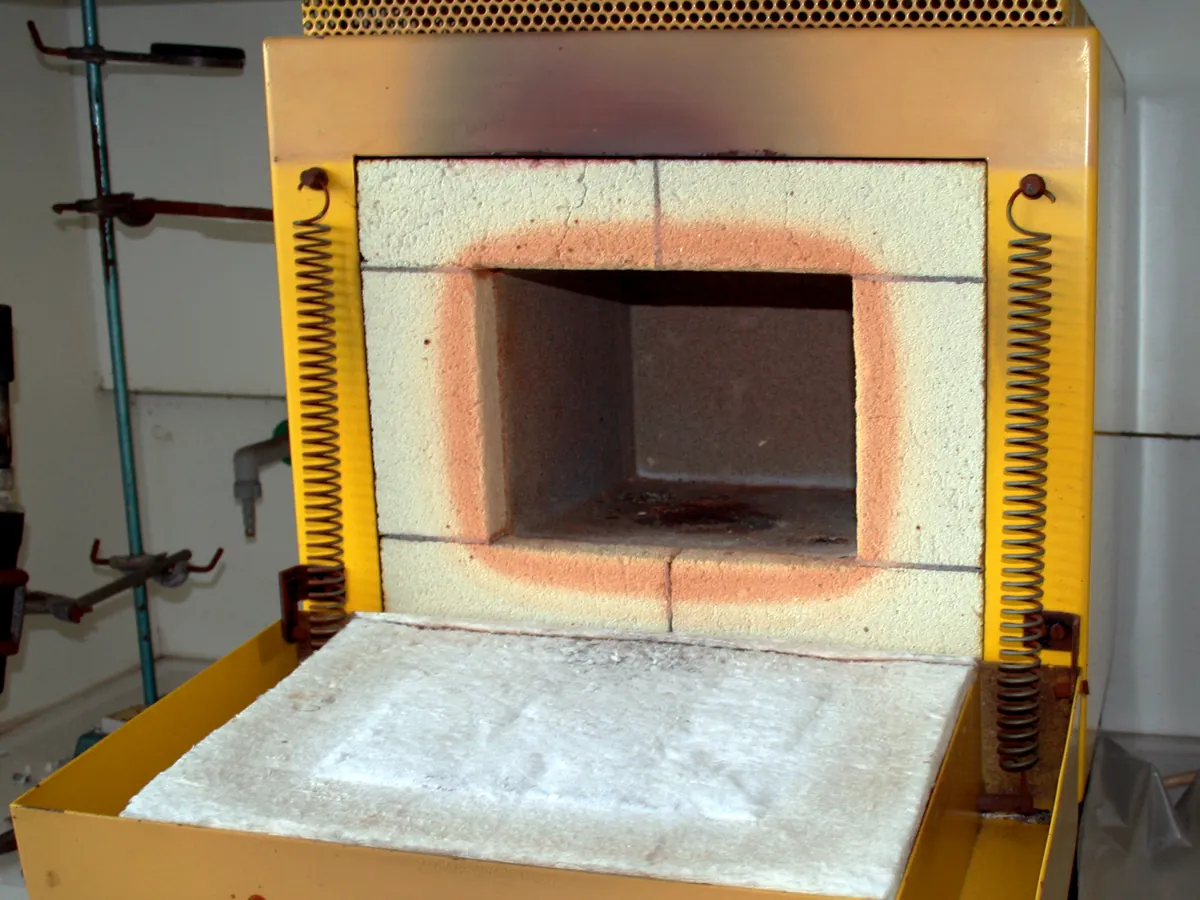
How Muffle furnace works
Electric heating elements behind a refractory muffle heat the chamber. A thermocouple measures the chamber temperature and a controller switches the elements to hold the set point. At high temperature, organic matter burns off and only the inorganic residue remains, which is then weighed.
The path of a sample
- 01
Set point
Enter the required temperature, for example 600 °C.
- 02
Heat up
The elements heat the chamber; the controller watches the thermocouple.
- 03
Stabilise
Wait until the chamber is stable at the set point.
- 04
Ignite
Place crucibles in the centre of the chamber for the set time.
- 05
Cool & weigh
Cool crucibles in a desiccator and weigh them.
Main parts and what they do
Chamber and muffle
Refractory-lined box that holds the crucibles and protects them from the elements.
Heating elements
Resistance wires (for example Kanthal) or silicon carbide rods in the walls.
Thermocouple
Type K or N sensor that measures the chamber temperature for the controller.
Temperature controller
PID controller with set point, ramp and timer functions.
Over-temperature cut-out
Independent safety device that switches off power if the chamber overheats.
Door and door switch
Insulated door; the switch may cut power to the elements when opened.
Exhaust vent / chimney
Lets fumes escape during ashing.
Terms every analyst should know
Ignition to constant mass
Heating and weighing are repeated until two weighings agree within a small set amount.
Thermocouple
A sensor made of two different metals that gives a voltage proportional to temperature. Type K and type N are common in furnaces.
Working zone
The central part of the chamber where the temperature is closest to the set point. Samples should be placed there.
Charring before ignition
Samples are first charred on a hot plate or burner so they do not catch fire or spit in the furnace.
Keep every Muffle furnace in control: usage logs, calibration and maintenance schedules, and automatic blocking of overdue instruments.