Polarimeter · Calibration procedure
Temperature
Compares the sample cell temperature shown by the polarimeter with a calibrated reference thermometer at the working temperatures.
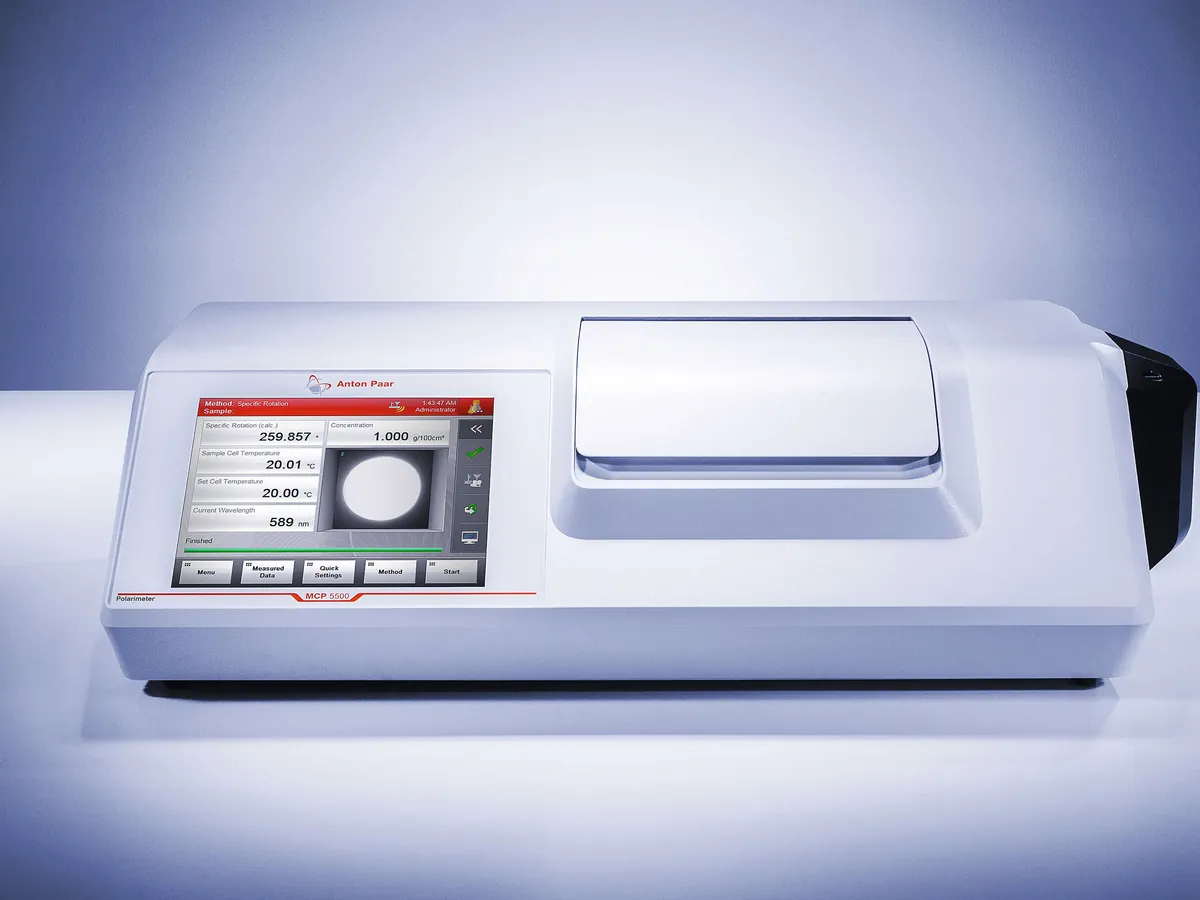
PURPOSE
Why this is checked
Optical rotation changes with temperature, and monographs state the temperature (usually 20 °C or 25 °C). A wrong cell temperature gives a wrong [α] even if the angle scale is perfect.
Frequency
Typically every 6 or 12 months and after repair, as defined in your calibration SOP.
Learn how the Polarimeter worksYOU WILL NEED
Standards & tools
- Calibrated reference thermometer or probe with traceable certificate, small enough to fit the sample tube
BEFORE YOU START
Prerequisites
- Instrument warmed up
- Tube filled with water or the probe fitted as the manufacturer describes
PROCEDURE
Step by step
- 1Set the cell temperature to 20.0 °C.
- 2Insert the reference probe into the tube filled with water, and place it in the instrument.
- 3Wait until both readings are stable (often 10–15 minutes).
- 4Record the instrument display and the reference reading.
- 5Repeat at 25.0 °C and at any other temperature you use.
RECORD
Example observation table
| Set point (°C) | Instrument display (°C) | Reference probe (°C) | Error (°C) | Result |
|---|---|---|---|---|
| 20.0 | 20.0 | 20.1 | −0.1 | Pass |
| 25.0 | 25.0 | 24.9 | +0.1 | Pass |
CALCULATION
How to calculate the result
Error = Instrument display − Reference reading
- At 20 °C: 20.0 − 20.1 = −0.1 °C
- At 25 °C: 25.0 − 24.9 = +0.1 °C
ACCEPTANCE CRITERIA
Pass if
- Error within the limit in your SOP, commonly ±0.5 °C or tighter as the manufacturer specifies.
IF IT FAILS
What to do
- Allow more time for stabilisation and repeat.
- If it still fails, adjust the temperature offset (if permitted) or call service.
- Assess optical rotation results since the last passing check.
MORE
Other Polarimeter calibrations
In LimsPulse · Calibration Management
LimsPulse schedules this calibration, records the result against limits, and blocks the instrument everywhere if it fails or goes overdue.