ICP-MS · Calibration procedure
Tuning & mass calibration
Uses a tuning solution of light, medium and heavy elements to check and adjust mass accuracy, peak width, sensitivity and the oxide and doubly charged ion ratios.
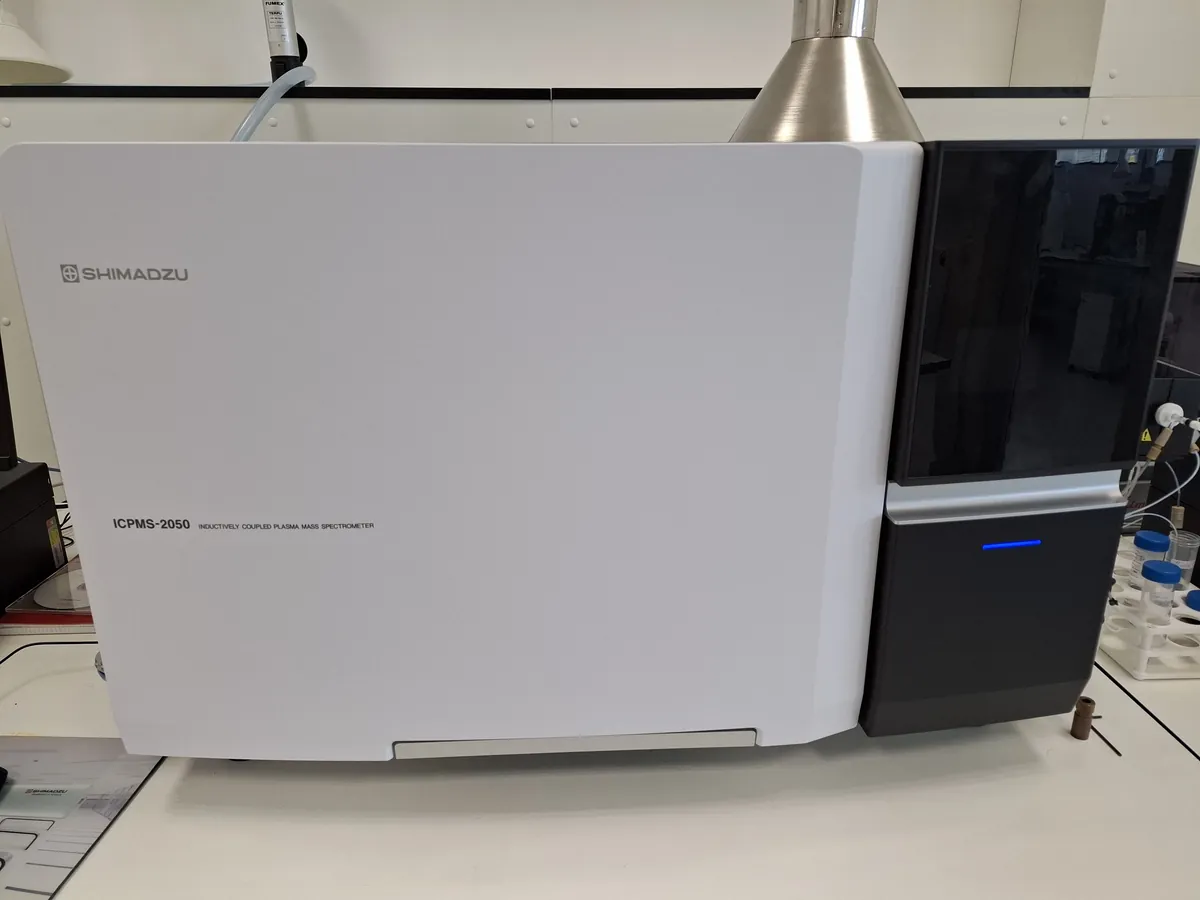
PURPOSE
Why this is checked
Ions must be measured at the right mass with enough resolution and sensitivity, and the plasma must produce few interfering oxide and doubly charged ions. Tuning confirms the instrument is fit before any elemental impurities analysis.
Frequency
Typically tuning check each day of use; full mass calibration and detection limit calibration every 6 or 12 months and after cone, lens or detector service, as defined in your calibration SOP.
Learn how the ICP-MS worksYOU WILL NEED
Standards & tools
- Manufacturer's tuning solution (e.g. Li, Co, Y, Ce, Tl at about 1 µg/L in 2% nitric acid), traceable
- 2% nitric acid blank
BEFORE YOU START
Prerequisites
- Vacuum in normal range
- Plasma lit and warmed up (often 20–30 minutes)
- Clean cones and fresh pump tubing
PROCEDURE
Step by step
- 1Aspirate the tuning solution.
- 2Run the auto-tune or performance report for the mode used (no gas and helium mode).
- 3Record sensitivity (cps) for low, mid and high mass, background, oxide ratio (CeO⁺/Ce⁺) and doubly charged ratio (Ce²⁺/Ce⁺).
- 4Check measured peak centres and peak widths for each mass; run a mass calibration if any are outside limits.
- 5Save the tune and print or store the report.
RECORD
Example observation table
| Parameter | Measured | Example limit |
|---|---|---|
| ⁷Li mass / peak width (10% height) | 7.00 / 0.72 amu | ±0.1 amu / 0.65–0.85 amu |
| ⁸⁹Y mass / peak width | 88.95 / 0.74 amu | ±0.1 amu / 0.65–0.85 amu |
| ²⁰⁵Tl mass / peak width | 205.03 / 0.75 amu | ±0.1 amu / 0.65–0.85 amu |
| ¹⁴⁰Ce⁺ counts | 98,000 cps | As specified |
| ¹⁵⁶CeO⁺ counts | 1,250 cps | — |
| ⁷⁰Ce²⁺ counts | 1,860 cps | — |
CALCULATION
How to calculate the result
Oxide ratio (%) = CeO⁺ ÷ Ce⁺ × 100; Doubly charged ratio (%) = Ce²⁺ ÷ Ce⁺ × 100
- Oxide ratio = 1,250 ÷ 98,000 × 100 = 1.28%
- Doubly charged ratio = 1,860 ÷ 98,000 × 100 = 1.90%
- Both below the example limits of 2–3%: passes
ACCEPTANCE CRITERIA
Pass if
- Mass accuracy typically within ±0.1 amu and peak width (10% height) within the manufacturer's range (often about 0.65–0.85 amu).
- Oxide (CeO⁺/Ce⁺) and doubly charged (Ce²⁺/Ce⁺) ratios typically below about 2–3%, and sensitivity above the manufacturer's minimum. Use the limits in your SOP.
IF IT FAILS
What to do
- Re-run auto-tune; check nebuliser gas flow, torch position and spray chamber temperature.
- Clean or replace cones; check for interface leaks.
- Run a full mass calibration; call service if it still fails.
- Do not analyse samples until the tune passes.
MORE
Other ICP-MS calibrations
In LimsPulse · Calibration Management
LimsPulse schedules this calibration, records the result against limits, and blocks the instrument everywhere if it fails or goes overdue.