Hot air oven · Calibration procedure
Temperature mapping
Measures the temperature at several positions in the chamber at the same time to show how uniform the oven is.
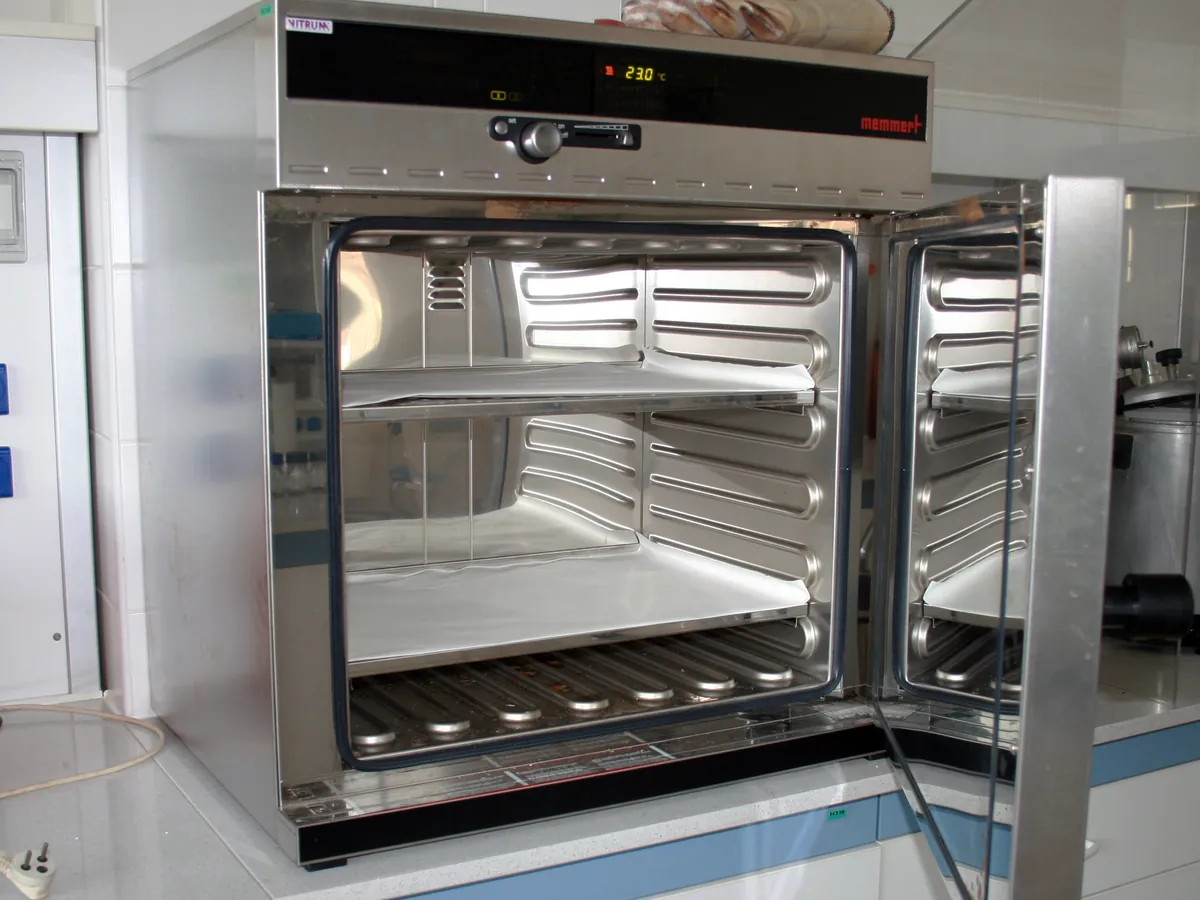
PURPOSE
Why this is checked
Ovens have warmer and cooler zones. Mapping shows which shelf positions stay within limits, so samples are only placed where the temperature is correct.
Frequency
At OQ/PQ, then typically annually and after major repair, relocation or change of load pattern, as defined in your SOP.
Learn how the Hot air oven worksYOU WILL NEED
Standards & tools
- Multi-channel data logger with at least 9 calibrated probes (for a small oven), traceable to national standards
BEFORE YOU START
Prerequisites
- Oven empty (or with a defined typical load for PQ)
- Probes calibrated before and verified after the study
- Probe positions drawn on a layout diagram
PROCEDURE
Step by step
- 1Place probes at the eight corners of the usable space (about 5 cm from the walls) and one at the centre.
- 2Set the oven to the working temperature (for example 105 °C).
- 3After stabilisation, record all probes every minute for at least 30 minutes.
- 4Calculate the mean at each position and the overall minimum, maximum and spread.
- 5Mark positions that fail as 'not for use' on the oven layout.
RECORD
Example observation table
| Probe | Position | Mean over 30 min (°C) |
|---|---|---|
| 1 | Top front left | 104.2 |
| 2 | Top front right | 105.6 |
| 3 | Top back left | 104.8 |
| 4 | Top back right | 105.9 |
| 5 | Centre | 105.1 |
| 6 | Bottom front left | 104.4 |
| 7 | Bottom front right | 106.1 |
| 8 | Bottom back left | 104.7 |
| 9 | Bottom back right | 105.3 |
CALCULATION
How to calculate the result
Uniformity (spread) = Highest mean − Lowest mean; Deviation = Probe mean − Set temperature
- Highest = 106.1 °C (probe 7), lowest = 104.2 °C (probe 1)
- Spread = 106.1 − 104.2 = 1.9 °C; overall mean = 105.1 °C
- Largest deviation = 106.1 − 105 = +1.1 °C (within ±2 °C)
ACCEPTANCE CRITERIA
Pass if
- Every probe within ±2 °C of the set temperature throughout the study (typical; use the limit in your SOP).
- Spread between the hottest and coldest positions within the SOP limit (for example not more than 4 °C).
IF IT FAILS
What to do
- Identify hot or cold spots and restrict use of those positions, or service the fan, heaters or door seal.
- Repeat the mapping after correction.
- Assess results generated in positions that were outside the limit.
MORE
Other Hot air oven calibrations
In LimsPulse · Calibration Management
LimsPulse schedules this calibration, records the result against limits, and blocks the instrument everywhere if it fails or goes overdue.