Sulphated Ash / Residue on Ignition
Measures the inorganic impurities left after an organic substance is charred with sulphuric acid and ignited at 600 ± 50 °C to constant mass. The residue is reported as a percentage of the sample.
- Ignition with sulphuric acid in a muffle furnace, gravimetric
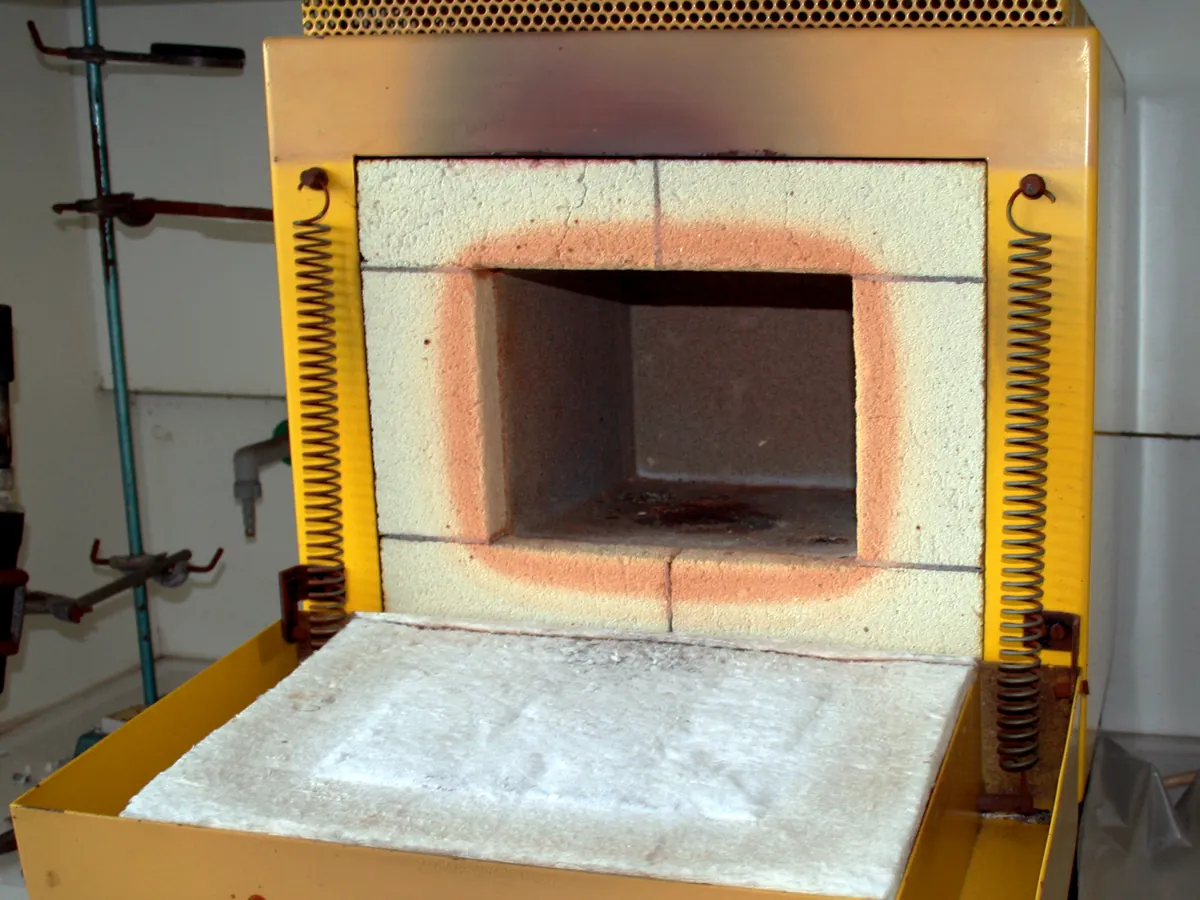
- Muffle furnace
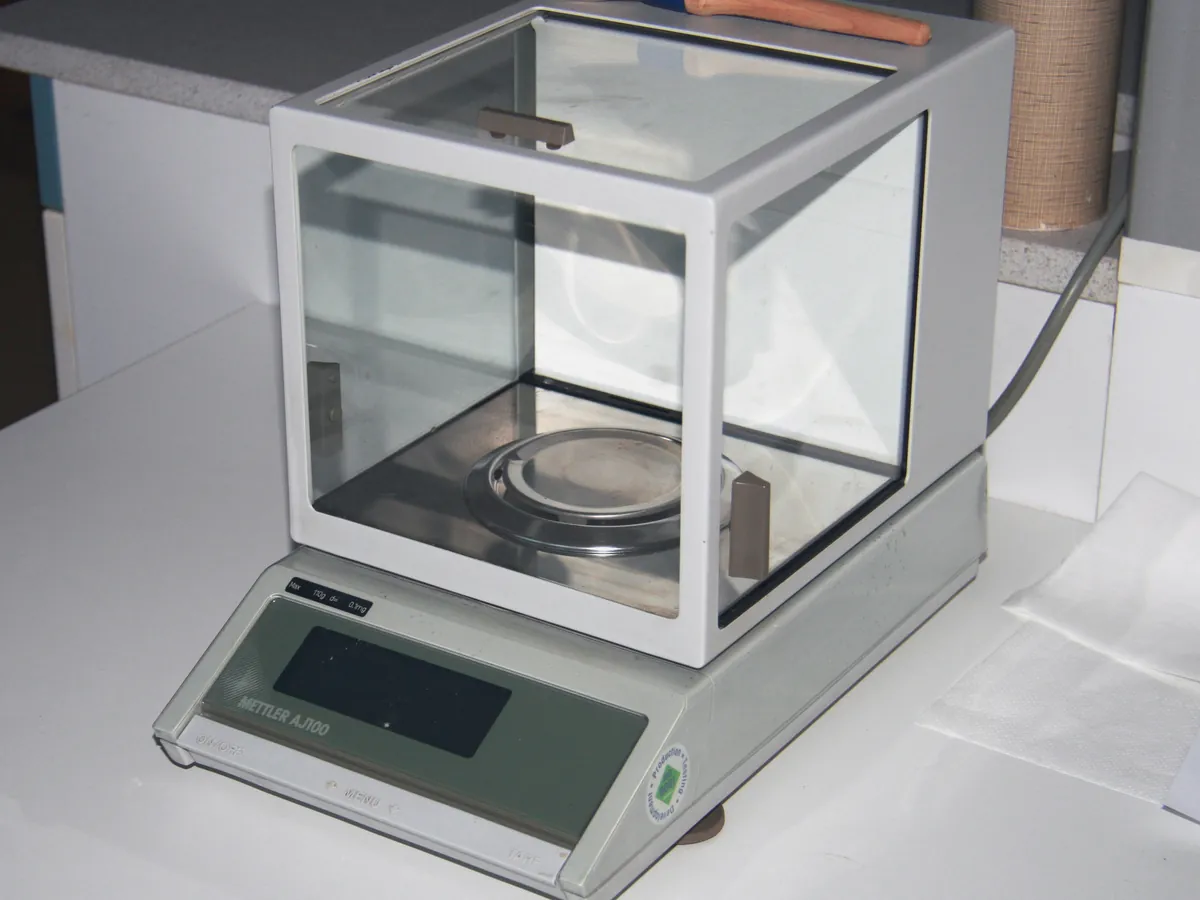
- Analytical balance
Reference: Typical procedure based on USP <281> Residue on Ignition and Ph. Eur. 2.4.14 Sulphated ash. Use the sample mass and limit in your monograph or specification.
Why this method works
Organic matter burns away on ignition, while inorganic impurities (metal salts and oxides) remain. Adding sulphuric acid converts these to stable sulphates, which give a reproducible residue that does not depend on which salt was present. The residue is weighed and expressed as a percentage of the sample mass.
Instruments used
Reagents & standards
| Reagent | Grade / specification |
|---|---|
| Sulphuric acid | Concentrated, analytical grade (low residue) |
| Crucible | Porcelain, silica or platinum, ignited to constant mass |
| Desiccator | With a suitable desiccant, for cooling crucibles |
Preparing the sample
- 01
Prepare crucible
Ignite the empty crucible at 600 ± 50 °C, cool and weigh.
- 02
Weigh sample
Weigh about 1 g of sample into the crucible.
- 03
Moisten & char
Add sulphuric acid and heat gently until charred.
- 04
Second acid
Moisten again with acid and heat until white fumes stop.
- 05
Ignite
Ignite at 600 ± 50 °C until all carbon is gone.
- 06
Constant mass
Cool, weigh, and repeat until the mass is constant.
Procedure
- 1Ignite a suitable crucible at 600 ± 50 °C for about 30 minutes, cool it in a desiccator and weigh it.
- 2Accurately weigh about 1 g of the sample (or the amount in the monograph) into the crucible.
- 3Moisten the sample with a small amount of sulphuric acid (about 1 mL) and heat gently on a hot plate or burner in a fume hood until the sample is thoroughly charred.
- 4Cool, moisten the residue again with a small amount of sulphuric acid, and heat gently until white fumes are no longer given off.
- 5Ignite in the muffle furnace at 600 ± 50 °C until the residue is free of black particles.
- 6Cool in a desiccator for a fixed time and weigh.
- 7Ignite again for about 30 minutes, cool and weigh. Repeat until two consecutive weighings agree within the limit in the chapter or your SOP (commonly 0.5 mg).
Notes for analysts
- The loss on drying calculator does not apply here: sulphated ash measures the residue left, not the mass lost.
- Char gently in a fume hood; sulphuric acid fumes are corrosive and the sample must not catch fire.
- Place crucibles in the centre of the furnace and use the same cooling time for every weighing.
- At very low residue levels, the result depends on careful weighing; a 0.1 mg error changes the result by about 0.01% for a 1 g sample.
Method parameters (typical)
| Ignition temperature | 600 ± 50 °C |
|---|---|
| Sample mass | About 1 g, or as in the monograph |
| Sulphuric acid | About 1 mL for each moistening |
| Cooling | In a desiccator, same time for every weighing |
| Constant mass | Consecutive weighings agree within about 0.5 mg (check your SOP) |
System suitability & sequence
| Parameter | Limit |
|---|---|
| Muffle furnace | Within calibration; crucibles in the central working zone |
| Balance | Daily check passed |
Typical sequence
- 1Ignite crucible to constant mass
- 2Sample weighing
- 3Charring with sulphuric acid
- 4Ignition
- 5Weighings to constant mass
Calculation with a worked example
Where
- W₁
- Mass of empty crucible after ignition to constant mass (g)
- W₂
- Mass of crucible + sample before ignition (g)
- W₃
- Mass of crucible + residue after ignition to constant mass (g)
Given
- W₁
- 25.4312 g
- W₂
- 26.4518 g
- W₃ (first ignition)
- 25.4322 g
- W₃ (second ignition)
- 25.4320 g
Working
- Constant mass: 25.4322 − 25.4320 = 0.0002 g (0.2 mg), within 0.5 mg, so use 25.4320 g
- Sample mass = 26.4518 − 25.4312 = 1.0206 g
- Residue = 25.4320 − 25.4312 = 0.0008 g
- Sulphated ash = 0.0008 ÷ 1.0206 × 100 = 0.078%
Sulphated ash = 0.08% (complies with a typical limit of not more than 0.1%)
What result passes
- Not more than the limit in the monograph or specification (often not more than 0.1% for APIs; check your monograph).
Validation parameters (ICH Q2(R2))
| Parameter | Typical requirement |
|---|---|
| Verification | Compendial method; verify suitability for the material (for example complete ignition with no black particles) |
| Precision | Duplicate results agree within the SOP limit |
Run this method in LimsPulse: specifications and STPs under version control, results calculated and checked against limits, and a signed Certificate of Analysis.