Refractometer · Calibration procedure
Refractive index with reference liquid
Measures purified water and a certified refractive index reference liquid and compares each reading with its known value at 20 °C.
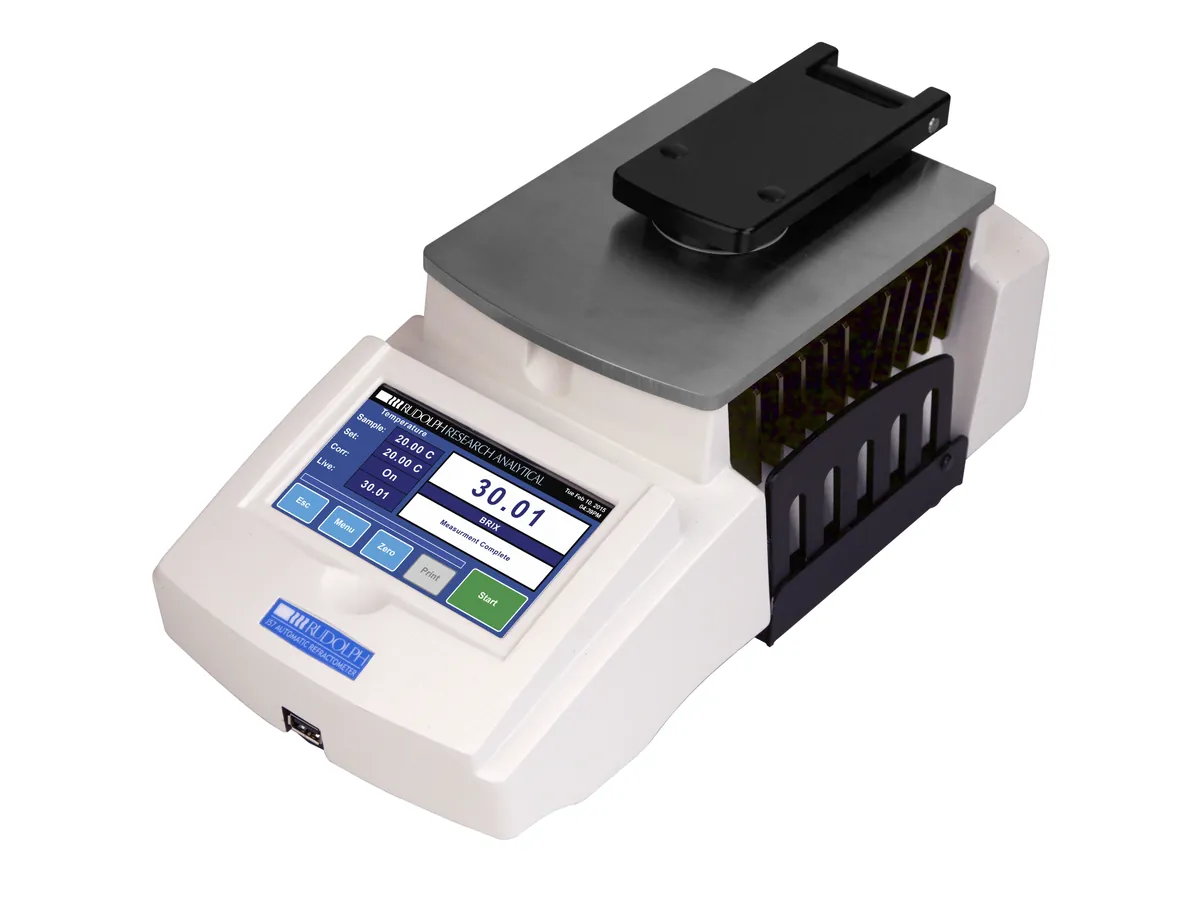
PURPOSE
Why this is checked
Confirms the refractometer reads true across its working range, so identity results for oils and solvents are correct.
Frequency
Typically every 6 or 12 months and after repair; a water check is often done daily or before use. As defined in your SOP.
Learn how the Refractometer worksYOU WILL NEED
Standards & tools
- Freshly prepared purified water (nD at 20 °C about 1.3330)
- Certified refractive index reference liquid close to the range you test, e.g. a nominal 1.48 standard, with certificate
BEFORE YOU START
Prerequisites
- Prism at 20.0 °C and stable
- Prism clean and dry
- Reference liquid within expiry and at room temperature
PROCEDURE
Step by step
- 1Place purified water on the prism, close the cover and wait for temperature stability.
- 2Take the reading and record it. Clean and dry the prism.
- 3Repeat with the certified reference liquid.
- 4Take three readings of each on fresh portions if your SOP requires, and use the mean.
- 5Calculate the difference between the reading and the known value.
RECORD
Example observation table
| Standard | Known value (nD at 20 °C) | Observed | Difference | Result |
|---|---|---|---|---|
| Purified water | 1.33299 | 1.33301 | +0.00002 | Pass |
| Certified RI liquid | 1.47992 | 1.47998 | +0.00006 | Pass |
CALCULATION
How to calculate the result
Difference = Observed − Known value
- Water: 1.33301 − 1.33299 = +0.00002
- Reference liquid: 1.47998 − 1.47992 = +0.00006
ACCEPTANCE CRITERIA
Pass if
- Each difference within the limit in your SOP, which combines the instrument specification and the certificate uncertainty (commonly within ±0.0002 for pharmacopoeial work; tighter for high-resolution instruments).
IF IT FAILS
What to do
- Clean the prism, check the temperature and repeat.
- If it still fails, adjust the instrument with water as the manufacturer describes and repeat the reference check.
- If it fails again, label it 'Out of calibration', call service and assess recent results.
In LimsPulse · Calibration Management
LimsPulse schedules this calibration, records the result against limits, and blocks the instrument everywhere if it fails or goes overdue.