Air sampler · Calibration procedure
Airflow calibration
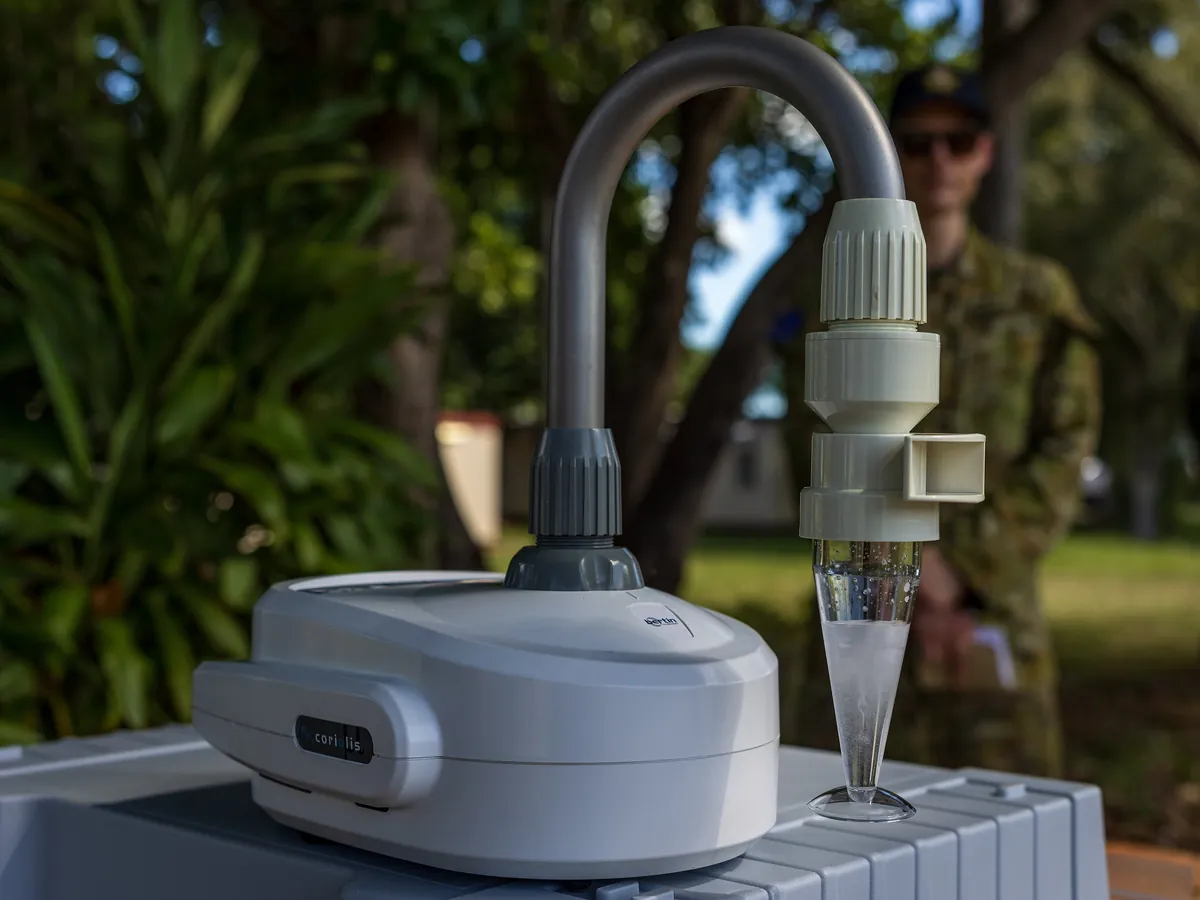
Checks that the air sampler draws air at its nominal flow rate (e.g. 100 L/min) by connecting a traceable flow meter to the sampling head, so that the volume sampled and the cfu/m³ result are correct.
PURPOSE
Why this is checked
The cfu/m³ result is the colony count divided by the volume sampled. If the sampler draws 10% less air than it claims, every result is about 10% too low. Airflow calibration confirms the volume is right and is adjusted if it has drifted.
Frequency
Typically every 12 months, or at the interval the manufacturer recommends, and after repair or a flow alarm.
Learn how the Air sampler worksYOU WILL NEED
Standards & tools
- Calibrated flow meter (e.g. mass flow meter or anemometer with adaptor) traceable to national standards, with an uncertainty small compared with the tolerance
- Adaptor that fits the sampling head without leaks
- Calibrated stopwatch for the timer check
BEFORE YOU START
Prerequisites
- Battery fully charged
- Head clean and holes clear
- Room conditions recorded (temperature and pressure), as some flow meters correct to standard conditions
PROCEDURE
Step by step
- 1Fit the adaptor and reference flow meter to the sampling head (with a plate in place, as in use).
- 2Start sampling at the nominal flow rate and allow it to stabilise.
- 3Record three reference flow readings.
- 4Calculate the mean and the error against the nominal flow.
- 5Time a full sampling cycle (e.g. 1000 L) with a stopwatch and compare with the expected time.
- 6If outside tolerance, adjust as per the manufacturer and repeat the as-left readings.
RECORD
Example observation table
| Reading | Nominal flow (L/min) | Reference flow (L/min) |
|---|---|---|
| 1 | 100 | 98.2 |
| 2 | 100 | 99.1 |
| 3 | 100 | 98.6 |
| Mean | 100 | 98.6 |
CALCULATION
How to calculate the result
Error (%) = (Mean reference flow − Nominal flow) ÷ Nominal flow × 100; Actual volume = Mean flow × Time
- Mean = (98.2 + 99.1 + 98.6) ÷ 3 = 98.63 L/min
- Error = (98.63 − 100) ÷ 100 × 100 = −1.4%
- A 10-minute sample therefore draws 98.63 × 10 = 986 L instead of 1000 L
- Within a typical tolerance of ±5%: Pass
ACCEPTANCE CRITERIA
Pass if
- Mean flow typically within ±5% of nominal, or within the manufacturer's stated tolerance, as defined in your SOP.
- Sampling time consistent with the set volume.
IF IT FAILS
What to do
- Label the sampler 'Not for use' and adjust or send it for service.
- Assess the impact on results since the last passing calibration (e.g. results near limits).
- Recalibrate before returning to use.
In LimsPulse · Calibration Management
LimsPulse schedules this calibration, records the result against limits, and blocks the instrument everywhere if it fails or goes overdue.