KF titrator (volumetric) · Calibration procedure
Drift check
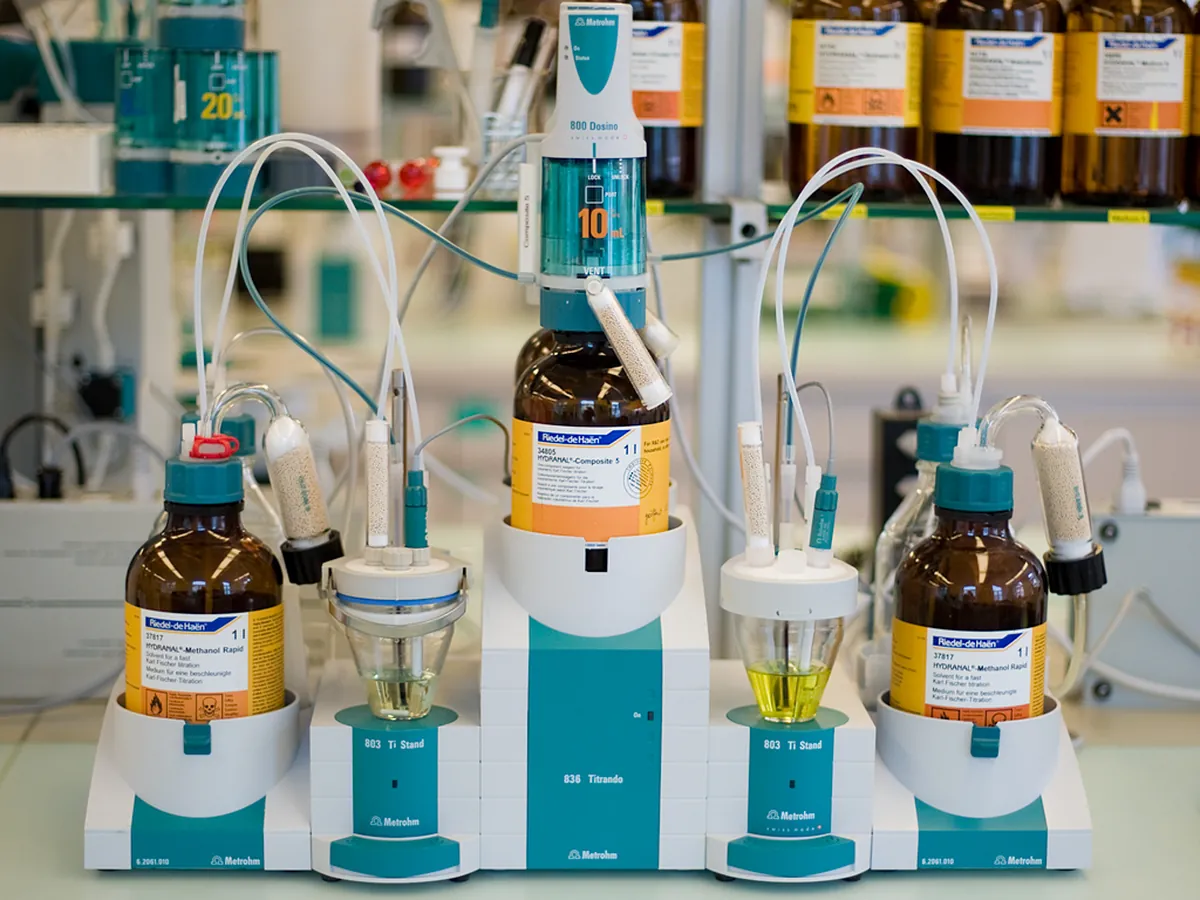
Confirms the conditioned titration cell is tight, by checking that the background drift is low and stable before use.
PURPOSE
Why this is checked
Frequency
Before every series of determinations and recorded with each result, as defined in your SOP.
Learn how the KF titrator (volumetric) worksYOU WILL NEED
Standards & tools
- No external standard; the titrator's own drift measurement is used
BEFORE YOU START
Prerequisites
- Fresh solvent in the cell
- Active molecular sieve in the drying tubes
- Septum and joints tight
PROCEDURE
Step by step
- 1Start conditioning and allow the titrator to dry the solvent.
- 2Record the drift at regular intervals (for example every 5 minutes).
- 3Confirm that the drift has fallen below the limit and has stopped changing.
- 4Record the final drift value in the logbook or software before running samples.
RECORD
Example observation table
| Time after conditioning start (min) | Drift (µg/min) |
|---|---|
| 5 | 24 |
| 10 | 13 |
| 15 | 8 |
| 20 | 8 |
CALCULATION
How to calculate the result
Drift correction (µg) = Drift (µg/min) × Titration time (min)
- Stable drift 8 µg/min, titration time 2.5 min
- Correction = 8 × 2.5 = 20 µg (0.020 mg) of water, subtracted automatically from the result
ACCEPTANCE CRITERIA
Pass if
- Drift not more than 20 µg/min and stable (typical value for volumetric KF; use the limit in your SOP).
IF IT FAILS
What to do
- Check and replace the septum and seals; regrease or reseat the joints.
- Replace or regenerate the molecular sieve.
- Exchange the solvent and recondition.
- Do not start determinations until the drift meets the limit.
MORE
Other KF titrator (volumetric) calibrations
In LimsPulse · Calibration Management
LimsPulse schedules this calibration, records the result against limits, and blocks the instrument everywhere if it fails or goes overdue.