ICP-OES · Calibration procedure
Detection limit check
Measures the noise of repeated blank readings and converts it into the lowest concentration the instrument can reliably detect for selected elements.
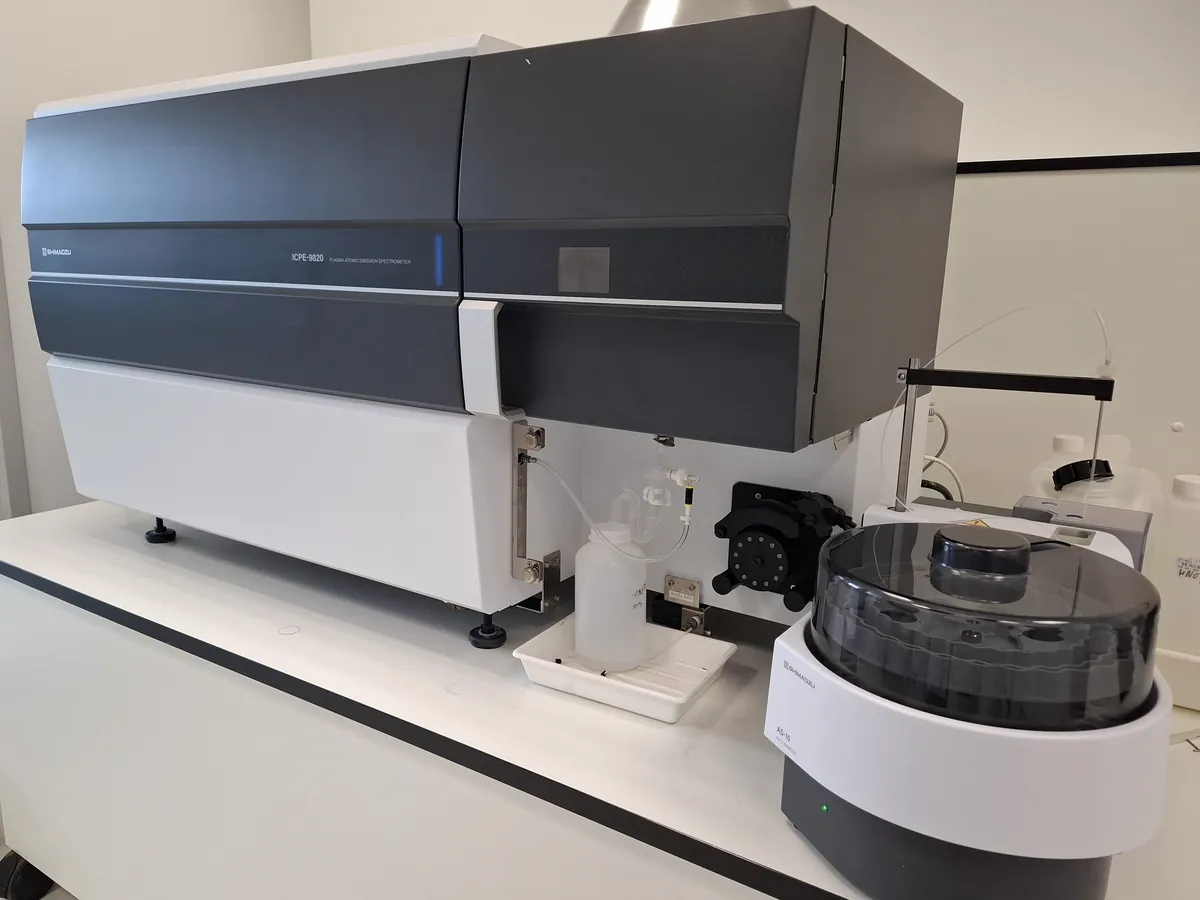
PURPOSE
Why this is checked
Elemental impurity methods need the instrument to see well below the target limit. A rising detection limit warns of a dirty torch, weak plasma or worn sample introduction parts.
Frequency
Typically wavelength calibration daily or per manufacturer recommendation, and detection limits every 6 or 12 months and after major repair, as defined in your calibration SOP.
Learn how the ICP-OES worksYOU WILL NEED
Standards & tools
- Dilute nitric acid blank (the same acid as the standards)
- Calibration standards of the test elements (e.g. Pb, Cd, As at known µg/L concentrations)
BEFORE YOU START
Prerequisites
- Plasma stable, wavelength calibration passed
- Calibration for the test elements just completed
PROCEDURE
Step by step
- 1Calibrate the test elements with a blank and at least one standard to obtain the slope (cps per µg/L).
- 2Aspirate the blank and record ten replicate readings for each element.
- 3Calculate the standard deviation of the blank intensities.
- 4Calculate the detection limit (3 × SD ÷ slope) and compare with the specification.
RECORD
Example observation table
| Replicate | Pb 220.353 nm blank intensity (cps) |
|---|---|
| 1 | 412 |
| 2 | 398 |
| 3 | 405 |
| 4 | 421 |
| 5 | 393 |
| 6 | 409 |
| 7 | 401 |
| 8 | 417 |
| 9 | 396 |
| 10 | 408 |
CALCULATION
How to calculate the result
Detection limit (µg/L) = 3 × SD of blank (cps) ÷ Slope (cps per µg/L)
- Mean blank = 406 cps; SD of blank = 9.15 cps
- Slope for Pb 220.353 nm = 15.0 cps per µg/L
- Detection limit = 3 × 9.15 ÷ 15.0 = 1.83 µg/L
ACCEPTANCE CRITERIA
Pass if
- Detection limit for each test element not more than the manufacturer's specification or the limit in your SOP (low single-digit µg/L is typical for Pb in axial view).
IF IT FAILS
What to do
- Clean the torch, nebuliser and spray chamber; replace pump tubing.
- Check the blank and acids for contamination.
- Re-optimise plasma conditions and repeat.
- Label 'Out of calibration' if it still fails.
MORE
Other ICP-OES calibrations
In LimsPulse · Calibration Management
LimsPulse schedules this calibration, records the result against limits, and blocks the instrument everywhere if it fails or goes overdue.