GC-MS · Calibration procedure
Mass calibration (autotune)
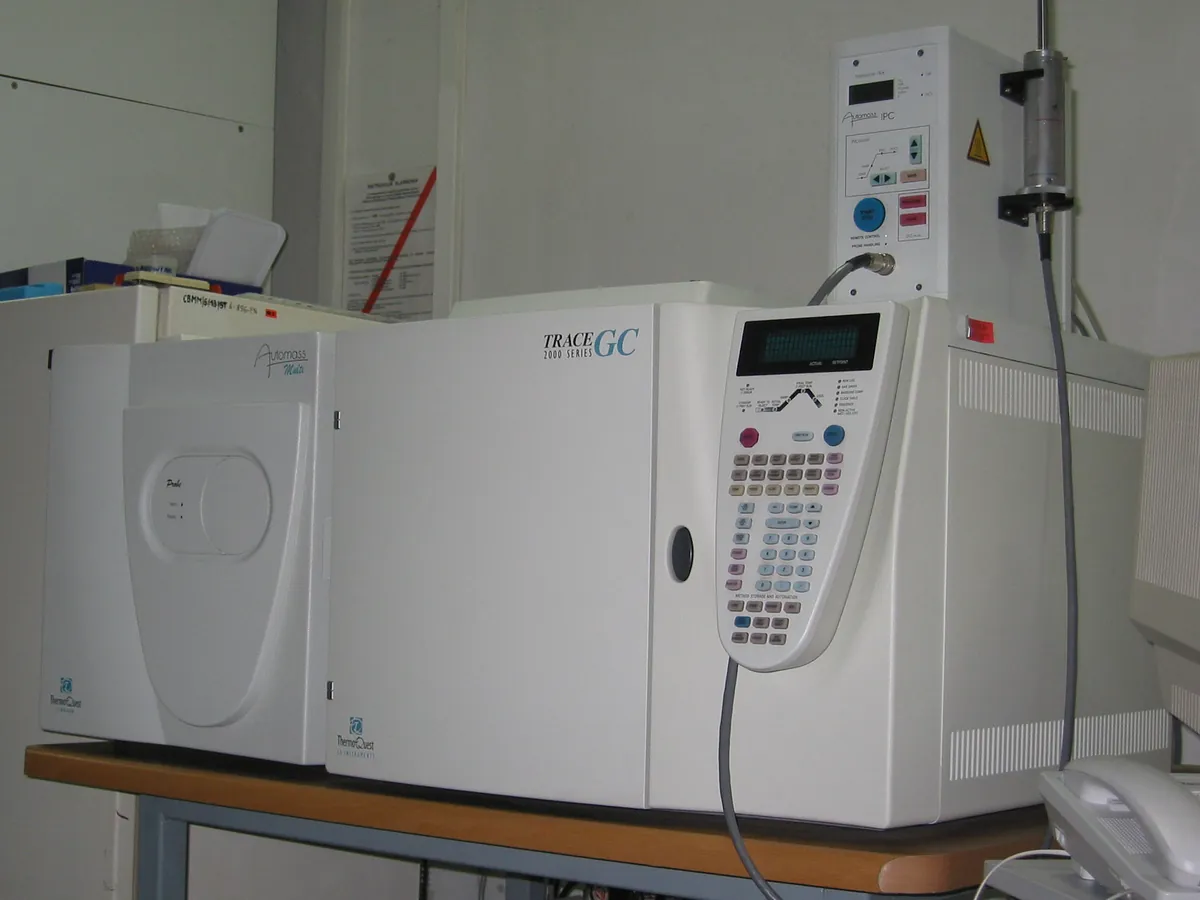
Runs the automatic tune with perfluorotributylamine (PFTBA) to set lens voltages and calibrate the mass axis, then reviews the tune report.
PURPOSE
Why this is checked
EI library searching and SIM quantitation depend on correct mass assignment, correct peak widths and normal relative abundances. The autotune report is also a quick health check for leaks, a dirty source or an ageing detector.
Frequency
Typically a tune check daily or before each batch, and a full autotune weekly, after source cleaning, venting or maintenance, as defined in your SOP.
Learn how the GC-MS worksYOU WILL NEED
Standards & tools
- Perfluorotributylamine (PFTBA) in the instrument's calibrant vial
- Manufacturer's tune acceptance criteria
BEFORE YOU START
Prerequisites
- Vacuum fully pumped down (often several hours after venting)
- Source and quadrupole at operating temperature
- Calibrant vial adequately filled
PROCEDURE
Step by step
- 1Start the autotune routine from the software; the calibrant valve opens and PFTBA enters the source.
- 2The software adjusts lens voltages and calibrates the mass axis on the PFTBA ions m/z 69, 219 and 502.
- 3Review the tune report: mass assignment, peak widths, relative abundances, isotope ratios, electron multiplier voltage and air / water ions (m/z 18, 28, 32).
- 4Compare each value with the manufacturer's or SOP criteria and save the report.
RECORD
Example observation table
| Ion (m/z) | Target | Observed | Difference | Isotope ratio (%) |
|---|---|---|---|---|
| 69 | 69.00 | 69.00 | 0.00 | 70/69 = 1.1 |
| 219 | 219.00 | 218.95 | −0.05 | 220/219 = 4.4 |
| 502 | 502.00 | 502.05 | +0.05 | 503/502 = 10.2 |
CALCULATION
How to calculate the result
Mass difference = Observed − Target; Isotope ratio (%) = Abundance (M+1) ÷ Abundance (M) × 100
- m/z 219 observed at 218.95: difference = 218.95 − 219.00 = −0.05 (within ±0.10)
- Abundance of m/z 220 = 4,410; abundance of m/z 219 = 100,250
- Isotope ratio = 4,410 ÷ 100,250 × 100 = 4.40%
ACCEPTANCE CRITERIA
Pass if
- Mass assignment typically within ±0.1–0.2 of the target m/z, as per the manufacturer's criteria.
- Peak widths, relative abundances and isotope ratios within the manufacturer's tune limits (isotope ratios are roughly 1.1%, 4.4% and 10% for 70/69, 220/219 and 503/502).
- Air / water ions low relative to m/z 69 (no leak), and electron multiplier voltage within its normal range.
IF IT FAILS
What to do
- Check for air leaks (high m/z 28 and 32) and fix them.
- Clean the ion source if voltages are high or abundances abnormal; replace the filament if it has failed.
- Replace the electron multiplier if its voltage is near its maximum.
- Re-run the autotune; do not acquire data until it passes.
In LimsPulse · Calibration Management
LimsPulse schedules this calibration, records the result against limits, and blocks the instrument everywhere if it fails or goes overdue.