Muffle furnace · Calibration procedure
Temperature accuracy
Compares the furnace display with a calibrated reference thermocouple placed in the working zone at the set points used in testing.
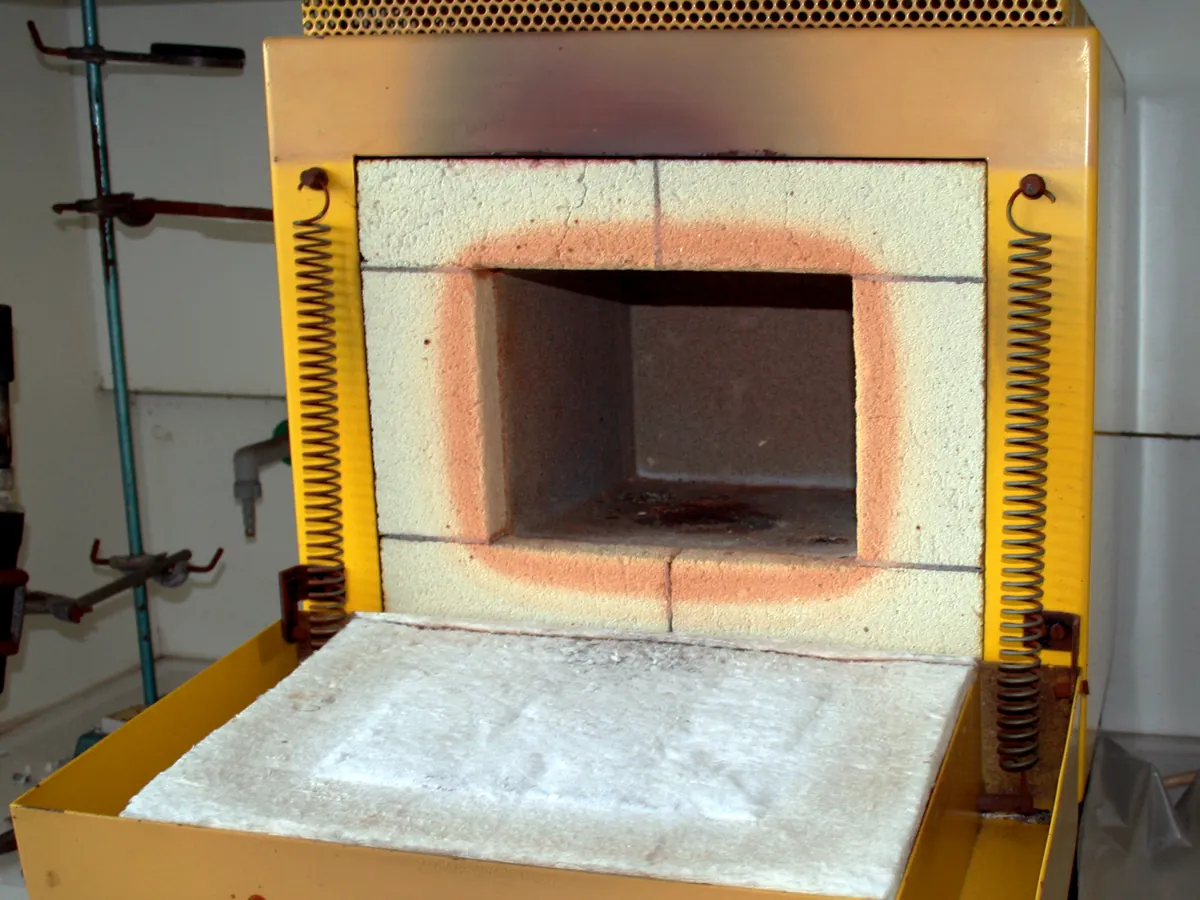
PURPOSE
Why this is checked
Sulphated ash and ignition tests specify a temperature, such as 600 ± 50 °C. The furnace must actually reach that temperature where crucibles sit.
Frequency
Typically every 6 months, and after element or thermocouple replacement, as defined in your SOP.
Learn how the Muffle furnace worksYOU WILL NEED
Standards & tools
- Calibrated reference thermocouple (type K or N) with a calibrated indicator, traceable to national standards
BEFORE YOU START
Prerequisites
- Chamber empty and clean
- Reference probe positioned in the centre of the working zone through the vent or door port
PROCEDURE
Step by step
- 1Place the reference thermocouple tip in the centre of the chamber.
- 2Set the furnace to the first set point (for example 450 °C) and allow it to stabilise for at least 30 minutes.
- 3Record the furnace display and reference reading several times over a few minutes.
- 4Repeat at the other set points (for example 600 °C and 800 °C).
RECORD
Example observation table
| Set point (°C) | Display (°C) | Reference (°C) | Difference (°C) |
|---|---|---|---|
| 450 | 450 | 446.8 | −3.2 |
| 600 | 600 | 604.5 | +4.5 |
| 800 | 800 | 793.9 | −6.1 |
CALCULATION
How to calculate the result
Difference = Reference reading − Display reading
- At 600 °C: 604.5 − 600 = +4.5 °C
ACCEPTANCE CRITERIA
Pass if
- Difference within the limit in your SOP (commonly ±10 °C), and always well inside the method tolerance, for example 600 ± 50 °C.
IF IT FAILS
What to do
- Label the instrument 'Out of calibration' and stop using it.
- Investigate the cause and arrange adjustment or repair.
- Assess the impact on results generated since the last passing calibration.
- Repeat the full calibration before returning it to use.
In LimsPulse · Calibration Management
LimsPulse schedules this calibration, records the result against limits, and blocks the instrument everywhere if it fails or goes overdue.